Published November 10, 2026 · TallyTidy
An emergency fund is cash you set aside for genuine surprises: a job loss, a medical bill, a major car repair or a broken furnace. It is not the same as saving for a vacation, holiday gifts or a new laptop. Those planned costs belong in a sinking fund. Keeping the two separate is what stops one bad month from wiping out a goal you have been funding all year.
This guide walks through how much to save, where to keep the money, and a simple monthly routine you can run in a spreadsheet or a printable tracker.
A common target is three to six months of essential expenses, not three to six months of your full take-home pay. Essentials are the bills you would still have to pay if your income stopped tomorrow: housing, utilities, groceries, insurance, minimum debt payments, transport and basic medical costs. Wants, subscriptions you could cancel and extra debt payments can wait.
| Situation | A realistic starting target |
|---|---|
| You have high-interest debt and little savings | A starter fund of $1,000 (or one month of essentials), then put extra money toward debt |
| One stable paycheck, fairly predictable expenses | Three months of essentials |
| Self-employed, commission-based or a single income household | Closer to six months of essentials |
| High housing costs or irregular medical needs | Lean toward the high end, or build in a dedicated sinking fund for those bills |
The “right” number is the one you will actually fund. A finished $2,000 starter fund is more useful than a $15,000 goal you never start. You can always raise the target once the habit is in place.
Sam’s take-home pay is $4,200 a month, but essentials come to $2,800. A three-month fund is $8,400; a six-month fund is $16,800. Sam starts with a $1,000 cushion (already half done with $400 in savings), then aims for $200 a month. At that rate the three-month target takes a little over three years if nothing else changes — or much less if tax refunds, bonuses or a raised payment go straight to the fund.
Use the free savings goal calculator to see how long your own target will take at a given monthly deposit, or how much you need to set aside to hit a deadline.
Go through the last two or three bank and card statements. List only the costs you would keep in a real emergency. If your income is irregular, use the method in how to budget with irregular income and size the fund off a typical lean month, not a great month.
Choose a starter target you can reach in three to six months, then a full target. Treat the monthly transfer like a bill. If you also use a 50/30/20 or zero-based budget, the transfer comes out of the “savings” share before leftover spending.
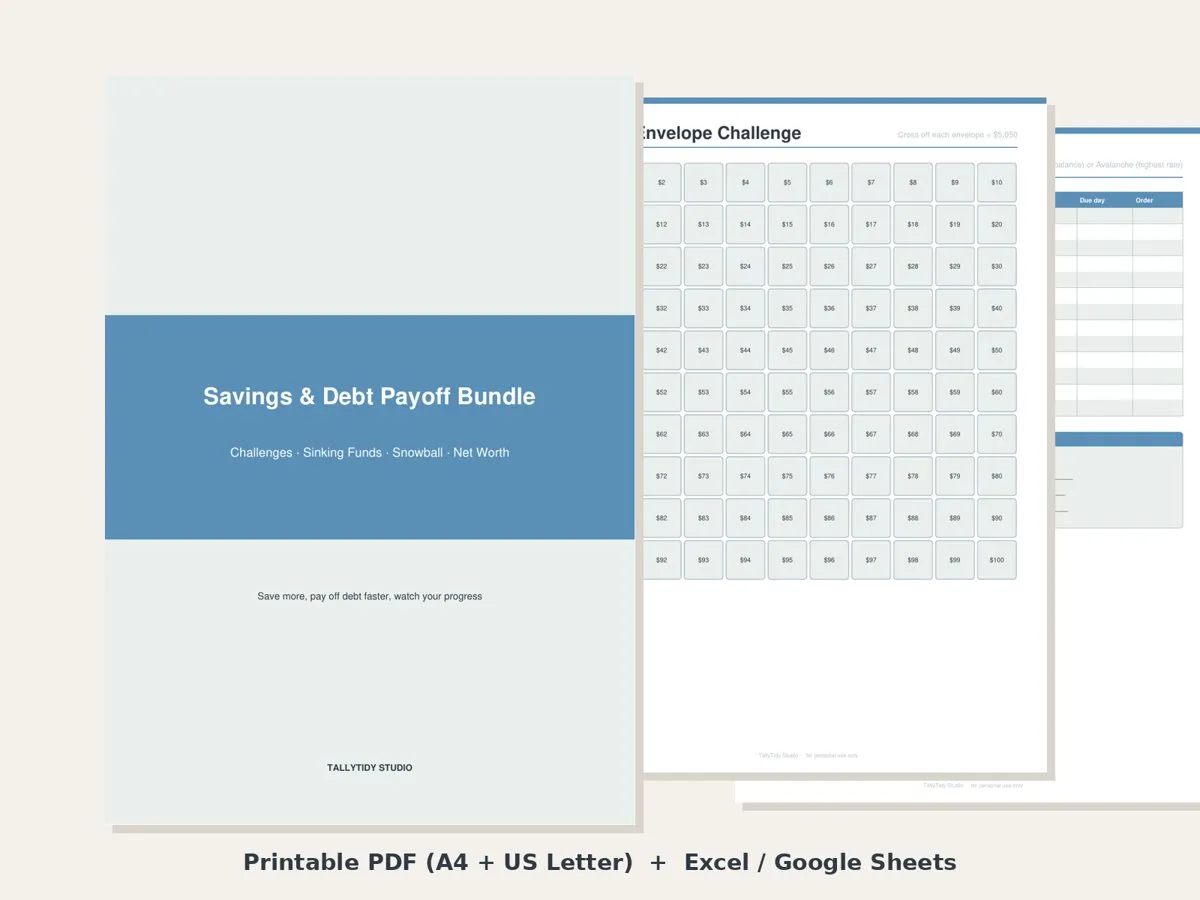
A scheduled transfer on payday is more reliable than waiting to see what is left. Record the balance once a month so you can see progress. A color-in tracker or a simple spreadsheet date-and-amount log is enough. The Savings Challenge & Debt Payoff Tracker Bundle includes printable savings challenges if you like checking off boxes; the 2027 Budget Planner has monthly savings pages next to your regular budget.
Car insurance deductibles, Christmas, annual car registration and vet checkups are predictable. Move those to sinking funds so the emergency account is only for things you could not see coming. If you need a refresher, see how to set up a sinking funds spreadsheet.
Using the fund is the point. When you do, pause extra savings goals for a month or two and refill it before you go back to the next goal. Note what the expense was. If the same “surprise” shows up again, it probably belongs in a sinking fund.
If you are following a debt snowball or avalanche plan, a small starter fund comes first so one surprise does not go back on the card. After that, many people hold the fund at a modest level and send extra money to debt, then grow the fund to three to six months once the expensive balances are gone. A debt payoff calculator and a debt payoff tracker help you see the trade-off clearly.
A 52-week savings challenge can also feed the fund if you like a structured weekly amount. Just keep the challenge money in the emergency account, not mixed with vacation savings.
You do not need special software. One sheet with these columns is enough: date, deposit or withdrawal, reason, running balance, and target. Add a cell for “months covered” (balance divided by essential monthly costs). If you already keep a monthly budget, add an “Emergency fund” line to the savings section of a budget spreadsheet or your monthly budget and debt planner so the transfer is planned, not leftover.
It is a solid starter target for many households, especially if high-interest debt is also in the picture. It is not a full emergency fund. Plan to keep going once you reach it.
Build a small cushion first so a surprise does not go on a credit card. Then split or rotate: keep funding a modest cushion while you attack expensive debt, and grow the fund after those balances are down.
Something necessary, unexpected and urgent: a job loss, an essential repair, an urgent medical bill. A sale, a vacation or a birthday is not an emergency.
Use separate savings accounts or clearly labeled sub-accounts. The emergency fund should not be the same pot you draw on for holidays or insurance premiums.
General educational information, not financial advice.