Published November 10, 2026 · TallyTidy
A budget built for a fixed paycheck often falls apart when your income changes from month to month. Freelancers, commission sales, seasonal work, tips and households with overtime all run into the same problem: a “normal” month is hard to define, so it is tempting not to budget at all. You can still give every dollar a job. You just plan around a reliable baseline and decide in advance what happens to anything above it.
This guide shows a practical setup you can run in Google Sheets or Excel, and how to combine it with invoices, sinking funds and a simple monthly review.
Most templates assume income is known on day one. With irregular income, that number is a guess. If you budget as if every month will be like your best month, you overspend in a slow one. If you freeze spending until you know the total, bills get paid late and you never start saving. The fix is to budget two layers: a bare-bones baseline you can cover in a lean month, and a pre-written plan for surplus.
List three to six months of take-home pay (after tax and fees, or after you set aside tax if you are self-employed). Do not use the best month. A useful baseline is the lowest month, or a typical lean month if one month was unusually bad.
Next, list essential expenses: rent or mortgage, utilities, groceries, insurance, minimum debt payments, transport, and a small personal amount so the plan is livable. If essentials are higher than the lean-month income, the first job is to cut or shift costs, or to build a larger buffer (see how to build an emergency fund).
| Line | Example (monthly) |
|---|---|
| Lean-month take-home pay | $3,200 |
| Essential bills and groceries | $2,650 |
| Minimum debt payments | $250 |
| Baseline surplus in a lean month | $300 |
| Average month (for reference only) | $4,100 |
In this example the person can live on $3,200. Anything above that is surplus to assign, not extra spending by default.
Have clients or your employer pay into a holding account. Once or twice a month, transfer only the baseline amount into the checking account you spend from. This turns lumpy income into a predictable “paycheck.” In a strong month the extra stays in the holding account until you assign it. In a weak month you draw on the buffer you built in stronger months, instead of putting groceries on a card.
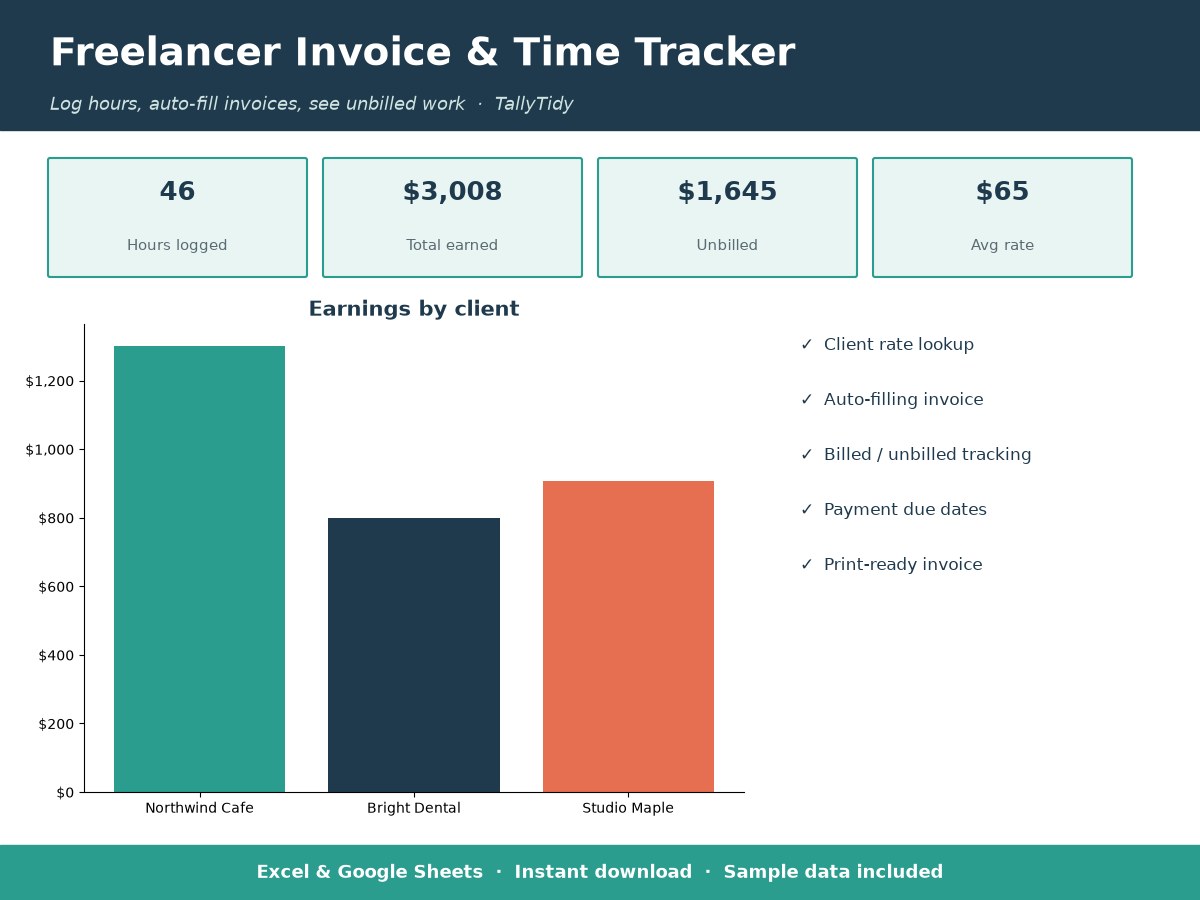
If you invoice for your work, a simple log of hours, invoices and paid dates makes the holding account much easier to trust. Our freelancer invoice and time-tracking guide and the freelancer invoice and time tracker cover that side of the workflow.
Decide the order before a good month arrives. A typical order:
You can still use a percentage framework such as 50/30/20 as a check, but apply it to the baseline first. Run the numbers in the 50/30/20 budget calculator, then put surplus through the waterfall rather than inflating the “wants” category just because a month was strong.
A workable irregular-income workbook has four sheets:
If you prefer paper, use a monthly planner and write the baseline at the top of the month, then add a surplus list when money actually arrives. The 2027 Budget Planner and the monthly budget and debt snowball planner both have space for income and category totals you can reuse this way.
At month end, add up what came in, confirm the tax reserve and buffer were funded, and check whether any sinking fund is behind. If a slow season is coming, pause extra debt payments and refill the holding account first. If several strong months have stacked up, it may be time to raise the baseline slightly — only after the buffer is solid.
If debt is part of the picture, combine this plan with a debt payoff tracker and the debt payoff calculator so extra payments happen only after the baseline and buffer are safe.
That is what the holding-account buffer is for. Spend only the baseline from checking, and skip surplus categories. If the buffer is too small, cut non-essentials immediately and use the emergency fund only for true essentials.
Put the whole payment in the holding account. Transfer one baseline “paycheck” now, set aside tax, and spread the rest across the next months or through your surplus waterfall. Do not treat the lump as one giant spending month.
Yes. Use the reliable paycheck for the baseline if there is one, and put the irregular income through the holding account and surplus plan. Agree on the waterfall together so a good month does not turn into an argument.
You can use it as a guideline on the baseline, or on a conservative average, but not on your best month. Surplus should follow your waterfall, including tax and the income buffer.
General educational information, not financial advice.