A monthly meal planner sounds like a lot of commitment, but it usually saves effort rather than adding it. Instead of deciding what to cook thirty separate times, you decide once, repeat what works, and shop from a list. The goal is not a perfect Pinterest calendar. It is fewer "what's for dinner?" conversations, fewer forgotten vegetables in the crisper, and a grocery bill that is easier to predict.
Weekly planning works, but you start from a blank page every Sunday. Planning a month lets you build a rotation once, spot repeats, plan around birthdays and busy weeks, and buy pantry staples in sensible amounts. You still shop weekly for fresh food; you just do not reinvent the menu each time.
Before opening a recipe site, write down 15 to 20 dinners you already cook and people actually eat. That is your core rotation. Add two or three new things to try per month at most. New recipes are where plans fall apart, so keep them in the minority.
Themes narrow choices without feeling repetitive: pasta night, tacos or wraps, soup, sheet-pan dinner, stir fry, breakfast-for-dinner, leftovers or "fridge clean-out". With seven themes, filling a month mostly means picking which pasta or which soup.
Look at the month before writing meals. Late work nights, sports practice and travel days get the fastest meals or leftovers. Weekends get the longer recipes. Mark any birthdays or hosting so you can plan the shop around them.
Cook once, eat twice. A roast chicken on Sunday becomes wraps on Monday. Chili on Wednesday becomes baked potatoes on Thursday. Write the second meal into the plan so leftovers are used rather than forgotten. This is one of the easiest ways to cut food waste.
Each week, copy that week's dinners into a list grouped by store section: produce, meat and fish, dairy, pantry, frozen. Check the fridge and cupboard first and cross off what you already have. Grouping by section keeps the shop quick and stops impulse wandering.
If you track spending, keep groceries as its own category and note each shop's total on the planner. After a month you will have a realistic grocery number for your budget rather than a guess. Our budget spreadsheet guide shows how to track it, and printable budget planner vs app helps you choose a format.
Most households keep these simple: two or three breakfast options and lunches built from dinner leftovers or a weekly batch of something. You do not need to plan them day by day; add their ingredients to the weekly list as staples.
Week 1 uses your four favorite rotation meals, plus tacos, soup and leftovers. Week 2 repeats the themes with different picks. Week 3 adds one new recipe. Week 4 includes a fridge clean-out night before the next big shop. That structure alone covers most of the month.
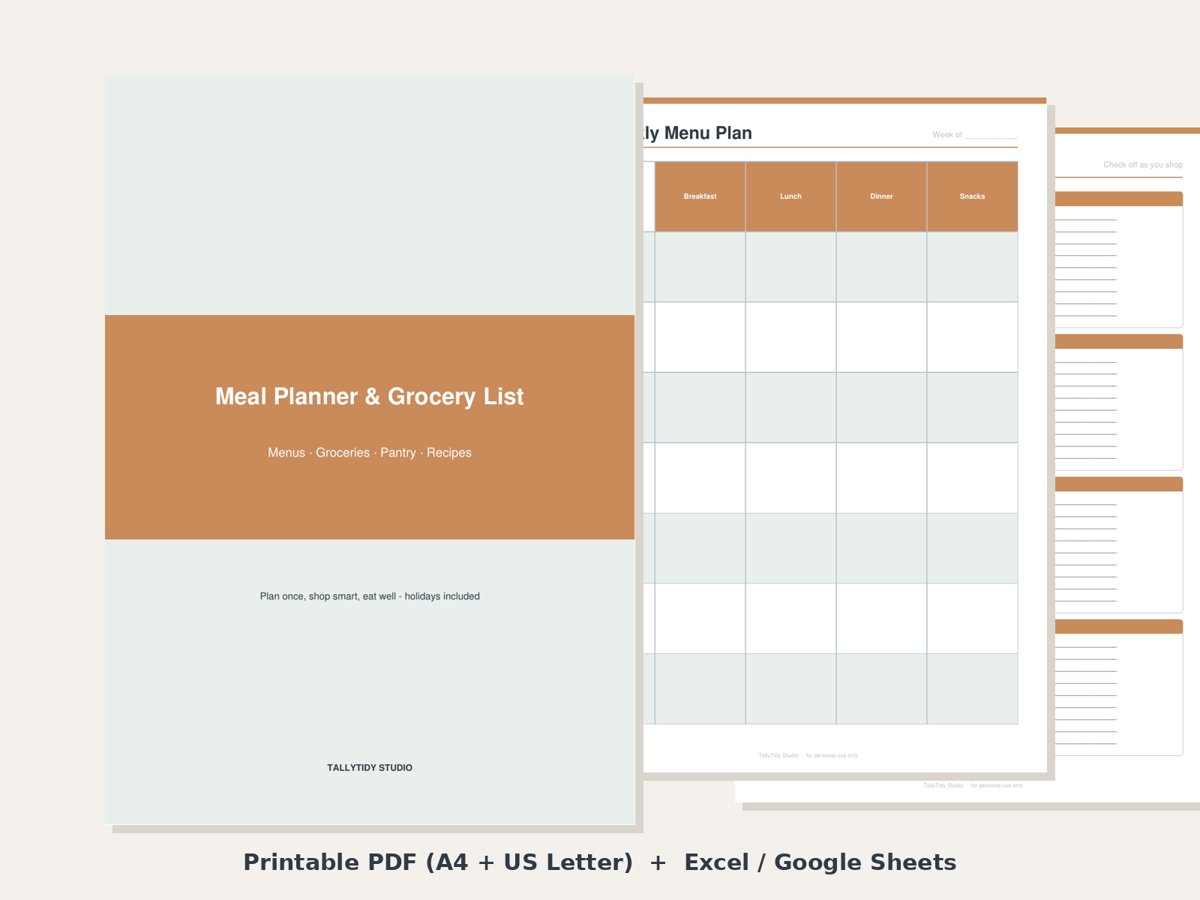
The Meal Planner Printable with Grocery List includes weekly and monthly meal pages with matching grocery lists. Spanish speakers can use the Planificador de Comidas. Pair it with the Undated Weekly Planner if you like seeing meals next to appointments, and see habit tracking tips for making the planning stick.
A monthly view shows which staples you use repeatedly: rice, pasta, canned tomatoes, beans, stock, spices, frozen vegetables. Buying these once at the start of the month and only topping up fresh items weekly keeps weekly shops small. Keep a short "running low" list on the fridge so anyone in the household can add items when they open the last jar.
Build a rotation of meals you already cook, give nights a theme, fill the month around your real calendar, plan leftovers on purpose and shop from one list a week. Next month, copy the plan and change a few dinners. A monthly meal planner gets easier every time you reuse it.
The first month takes longest. After that, reusing and tweaking last month's plan is fairly quick.
Lean on the rotation of known favorites and build-your-own nights like tacos or bowls.
Add staples to the weekly list; detailed snack planning is rarely worth it.