An undated weekly planner solves the biggest reason paper planners get abandoned: the guilt of empty pages. With a dated planner, skip two weeks in February and the gap stares at you. With an undated weekly planner you simply write the next date and carry on. Below is a simple way to set one up, a weekly routine that takes about ten minutes, and some ideas for making it stick.
Pick a regular time, such as Sunday evening or Monday morning, and do these in order:
Each morning, glance at today's box and add anything new. Each evening, tick what got done and move what did not. The point is a quick check-in, not a beautiful journal. Use a pen color for appointments and another for tasks if it helps you scan.
If a priority needs focus, give it a block: "Tue 9–11 quarterly report". Blocks make it obvious when a day is overloaded. If you have written six hours of tasks into a day with four free hours, move something now rather than discovering it at 5 p.m.
Many weekly layouts leave room for a mini habit tracker: water, exercise, reading, a no-spend day. Pick two or three habits at most. Our habit tracking tips explain why fewer habits tend to last longer.
The weekly page is a natural place to note bill due dates and a spending check-in. Write "budget check" in one day's box, and pair it with our printable budget planner vs app comparison if you are deciding how to track money. Some people also jot the week's dinners in a corner, borrowing from a monthly meal planner.
This is where undated planners earn their keep. When you come back after a busy stretch, do not try to fill in the missed weeks. Start a fresh spread with today's date, do the 10-minute setup, and move on. That is the whole recovery plan.
| Undated | Dated | |
|---|---|---|
| Start date | Any time | Usually January or the academic year |
| Missed weeks | No wasted pages | Blank pages remain |
| Setup | Write dates weekly | Ready to use |
| Holidays printed | No | Often |
If you like everything pre-filled, a dated planner may suit you; if your life is irregular, undated is usually easier to keep up.
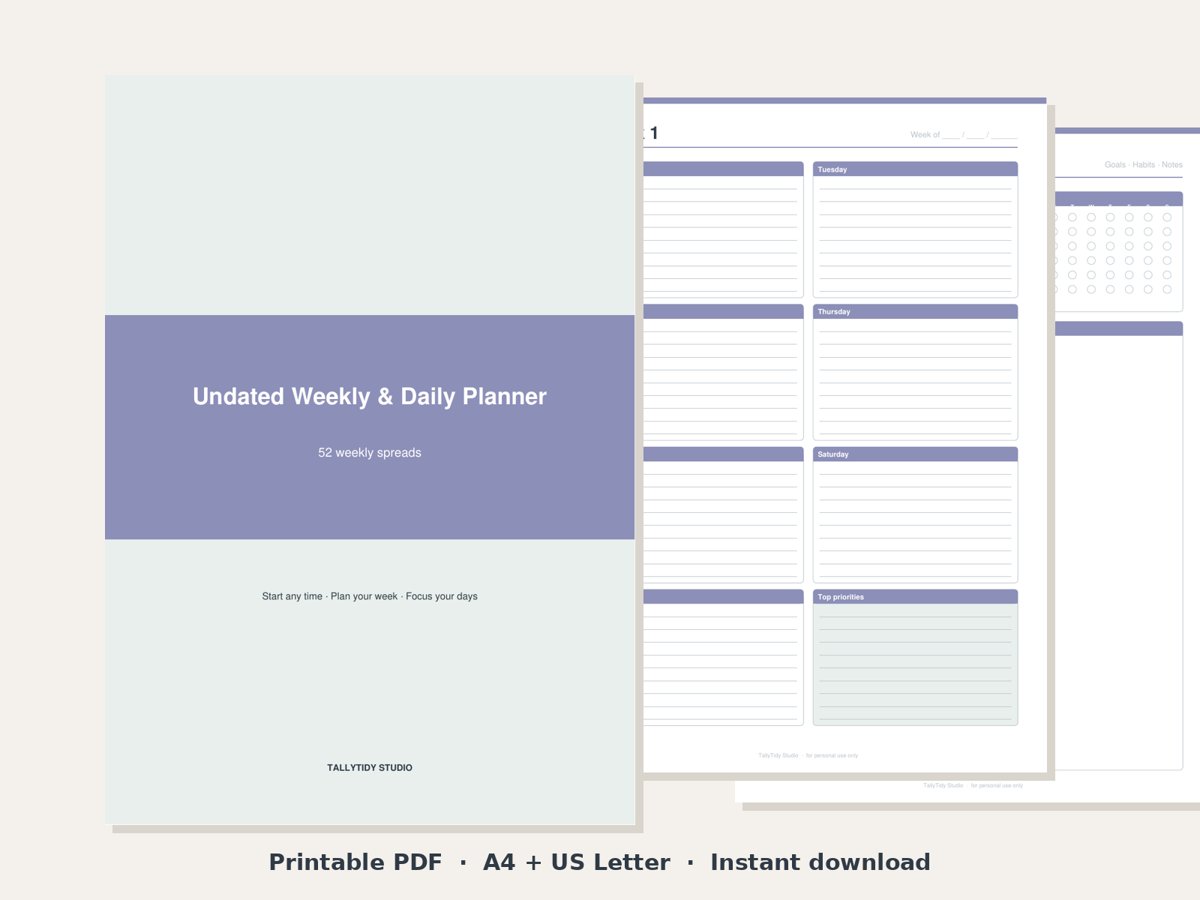
The Undated Weekly Planner printable has 52 weekly spreads with priorities, daily boxes and notes. For yearly goals, pair it with the Habit & Goal Tracker 2027, and teachers may prefer the Agenda Docente.
Once a month, flip back through the last four spreads. Notice which tasks keep moving forward week after week. Those are either too big (break them into steps), not important (drop them), or need a fixed time block. This five-minute review is what turns a planner from a to-do list into a tool for making progress.
Set a weekly ten-minute appointment, write the dates, copy fixed commitments, choose three priorities and give them time. Check in briefly each day. When life gets busy and you miss a week or three, start a fresh spread with today's date. That is how an undated weekly planner keeps working long after most planners end up in a drawer.
Yes, a PDF planner can be used in note-taking apps that support PDF annotation, or printed.
Print at the paper size the file was made for, such as A4 or US Letter, with scaling set to "fit" if margins are cut off.
Limit yourself to three weekly priorities and keep everything else on a separate list.