Wedding Planning Checklist: A Month-by-Month Timeline
Published November 3, 2026 · TallyTidy
Planning a wedding is less about doing everything and more about doing things in the right order. Venues and key vendors book up first, invitations depend on a final guest list, and the last month is mostly confirmations. This wedding planning checklist is organized as a timeline for a typical 12-month engagement. If you have less time, start at the stage that matches your date and do the earlier items quickly in the first week or two.
Before anything else: three decisions
Total budget. Agree on a number and who is contributing. Everything else depends on it. Our guide on how to make a wedding budget walks through setting a total and splitting it by category.
Rough guest count. A range is fine, like 80 to 100. Guest count drives venue size and catering, usually the biggest costs.
Season and style. A season and a general feel (formal, relaxed, outdoor, city) narrow venue choices quickly.
12 to 9 months before
Set up a planning binder or shared spreadsheet with tabs for budget, guests, vendors and a timeline.
Draft the guest list with names and addresses, not just a count.
Visit venues and confirm what is included: tables, chairs, linens, catering rules, end time, rain plan.
Book the venue and set the date.
Book vendors that take one event per day: photographer, videographer, officiant, band or DJ, and planner if you want one.
Choose the wedding party.
9 to 6 months before
Shop for wedding attire; many gowns take several months to order plus alterations time.
Book caterer (if not in-house), florist, and hair and makeup.
Send save-the-dates, especially for destination or holiday weekends.
Reserve hotel room blocks for out-of-town guests.
Set up a wedding website if you plan to use one.
Start a registry.
6 to 4 months before
Book rentals, transportation and cake or dessert.
Plan the ceremony with your officiant and check marriage license rules where you are marrying.
Order invitations and stationery.
Book rehearsal dinner location.
Plan honeymoon travel and check passport expiry dates.
3 to 2 months before
Mail invitations about 6 to 8 weeks before the date, with an RSVP deadline roughly 3 to 4 weeks before.
Schedule dress fittings.
Have a menu tasting and confirm final menu.
Buy rings.
Draft a day-of timeline and share it with your photographer and venue.
Choose readings, music and first-dance song.
The last month
Chase missing RSVPs and give the caterer a final count by their deadline.
Build the seating chart.
Get the marriage license within the validity window your state or country allows.
Confirm every vendor: arrival time, address, contact person on the day, and final balance due.
Prepare envelopes with final payments and tips, labelled by vendor.
Assign a trusted friend or coordinator as the day-of point of contact.
Week of and after
Rehearsal and rehearsal dinner.
Deliver décor, signage and favors to the venue.
After the wedding: return rentals, send thank-you notes, and change your name on documents if you plan to.
How to keep the checklist under control
A long checklist is only useful if you can see what is done and what is waiting on someone else. A few habits make a big difference:
Track this
Why
Owner of each task
Avoids two people assuming the other did it
Due date
Lets you sort by what is next
Status (not started, waiting, done)
"Waiting" items are the ones to chase
Vendor deposit and balance dates
Payments are spread over months and easy to miss
Contract location
You will need it when something changes
Hold a 20-minute planning check-in each week with your partner. Review only what is due in the next two weeks. That keeps planning from taking over every conversation.
Paper binder or spreadsheet?
Many couples use both. A binder is good for vendor meetings, fabric swatches, printed contracts and the day-of timeline that travels with your coordinator. A spreadsheet is better for numbers that change: the guest list, RSVPs, meal choices and the budget. Pick one place as the source of truth for each type of information so nothing gets updated in one place and not the other.
Ready-made planning tools
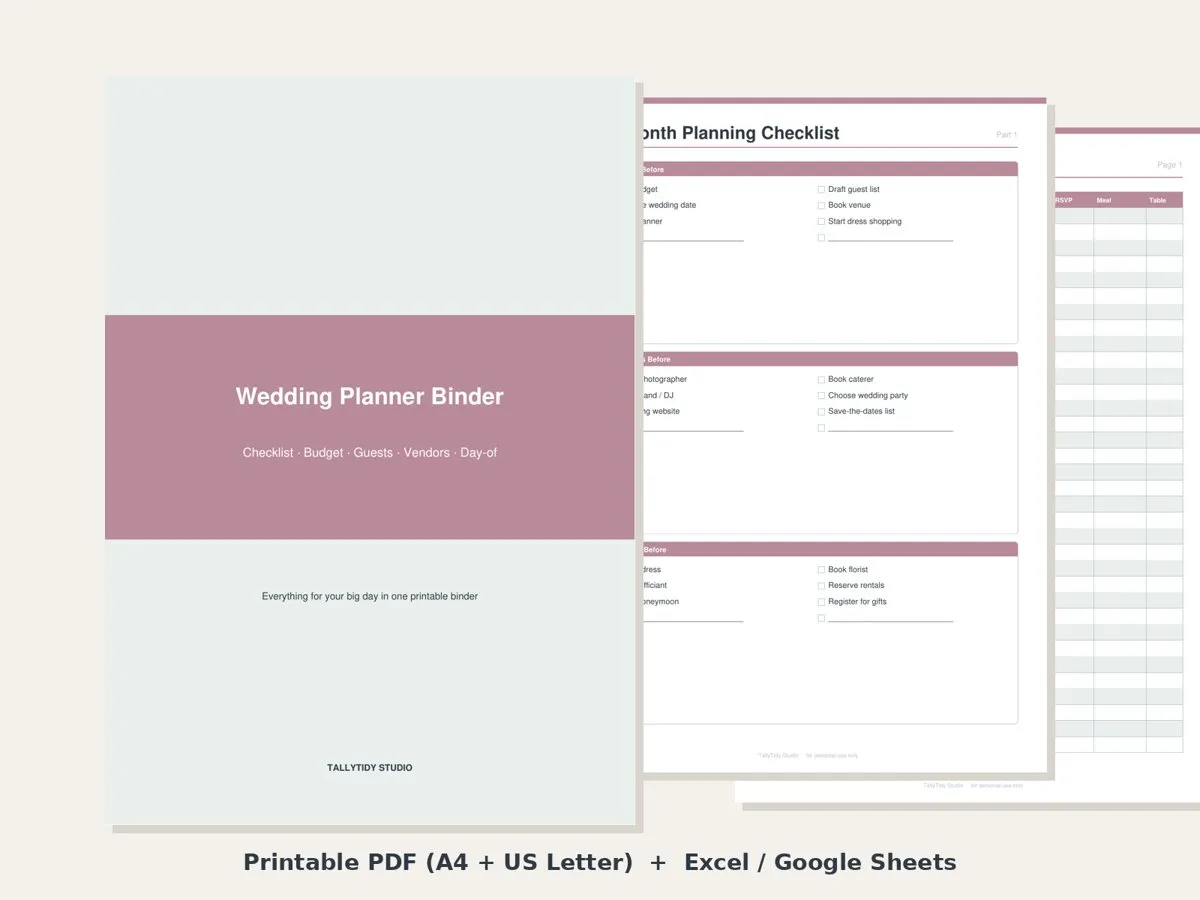
The Wedding Planner Binder is a printable set with checklists by month, vendor pages, timelines and day-of sheets. For the numbers side, the Wedding Budget Planner Spreadsheet tracks estimated vs. actual costs, payments due and the guest list with RSVPs in Excel or Google Sheets.
Common timeline mistakes
Sending invitations before the guest list is final. Adding names later is awkward and often breaks the seating plan.
Booking décor before the venue. Venue rules on candles, confetti, hanging items and setup times decide what décor you can use.
Leaving alterations too late. Most attire needs more than one fitting; book the first fitting about two months out.
No buffer before the date. Aim to finish every purchase and DIY project a week early so the last days are for rest and confirmations.
Frequently asked questions
Can I plan a wedding in six months?
Yes. Book venue and photographer in the first two weeks, then compress the rest. Flexibility on date or day of the week helps a lot.
When should invitations go out?
Commonly 6 to 8 weeks before, earlier for destination weddings.
What is most often forgotten?
Vendor meals, tips, postage for invitations, alteration costs and the marriage license deadline.
General information; check local marriage license rules with your county or registry office.