Published November 3, 2026 · TallyTidy
Kakeibo (家計簿, pronounced "kah-keh-boh") simply means "household account book" in Japanese. The method is usually credited to Hani Motoko, a Japanese journalist who published a household ledger for readers in 1904. More than a century later it is still popular because it asks for something most budgeting apps skip: a few minutes of honest reflection each week. This guide explains how the method works and how to set up a kakeibo template on paper, in a spreadsheet or on a tablet.
Most budgets start with categories like groceries, gas and dining out. Kakeibo starts with intent. Before the month begins you write down what you expect to earn and what you want to save. During the month you record every purchase by hand. At the end you look back and ask what went well and what you would change. Writing things down slows you down just enough to notice impulse spending, which is the whole point.
A traditional kakeibo page is built around four questions:
Instead of dozens of budget lines, kakeibo sorts every purchase into one of four broad groups. This keeps recording fast and makes the reflection more useful.
| Category | What goes here | Examples |
|---|---|---|
| Needs (survival) | Things you need to live and work | Rent, groceries, utilities, transport, medicine |
| Wants (optional) | Nice to have, could skip | Takeout, clothes beyond basics, streaming, hobbies |
| Culture | Things that feed your mind | Books, museum tickets, classes, concerts |
| Unexpected (extra) | One-offs you did not plan | Car repair, gifts, a broken phone, a vet visit |
The categories are deliberately loose. A concert could be "culture" for one person and "wants" for another. What matters is that you choose consistently and that you are honest when you review.
At the top of the month write your income, then subtract fixed costs you already know (rent, insurance, phone, loan payments). What remains is the money you actually manage this month. Write your savings goal next to it and subtract that too. The final figure is your spending budget for the month.
| Line | Example |
|---|---|
| Take-home income | $3,800 |
| Fixed costs | −$1,950 |
| Savings goal | −$400 |
| Available to spend | $1,450 |
The numbers above are only an illustration; use your own.
Give each week its own page or tab with four columns, one per category. Each purchase gets a date, a short description and an amount. At the end of the week total each column and write one sentence about the week. Five to ten minutes on a Sunday evening is enough.
Add up the four weekly totals per category. Compare total spending with the "available to spend" figure from Step 1 and note whether you met your savings goal. Then answer the fourth question in writing. Good reflections are specific: "Wants were high because I ordered lunch four times during the busy week; next month I will pack lunch on Mondays and Tuesdays" is far more useful than "spend less".
=SUMIF(C:C,"Wants",D:D) totals one category. Our guide to building a budget spreadsheet covers the basics.Kakeibo is less rigid than a zero-based budget, where every dollar gets a job, and more hands-on than the 50/30/20 rule. It suits people who want awareness more than strict limits, people who like journaling, and anyone who has tried an app and stopped opening it. If you carry debt, you can combine it with a payoff plan by making extra debt payments part of your savings goal.
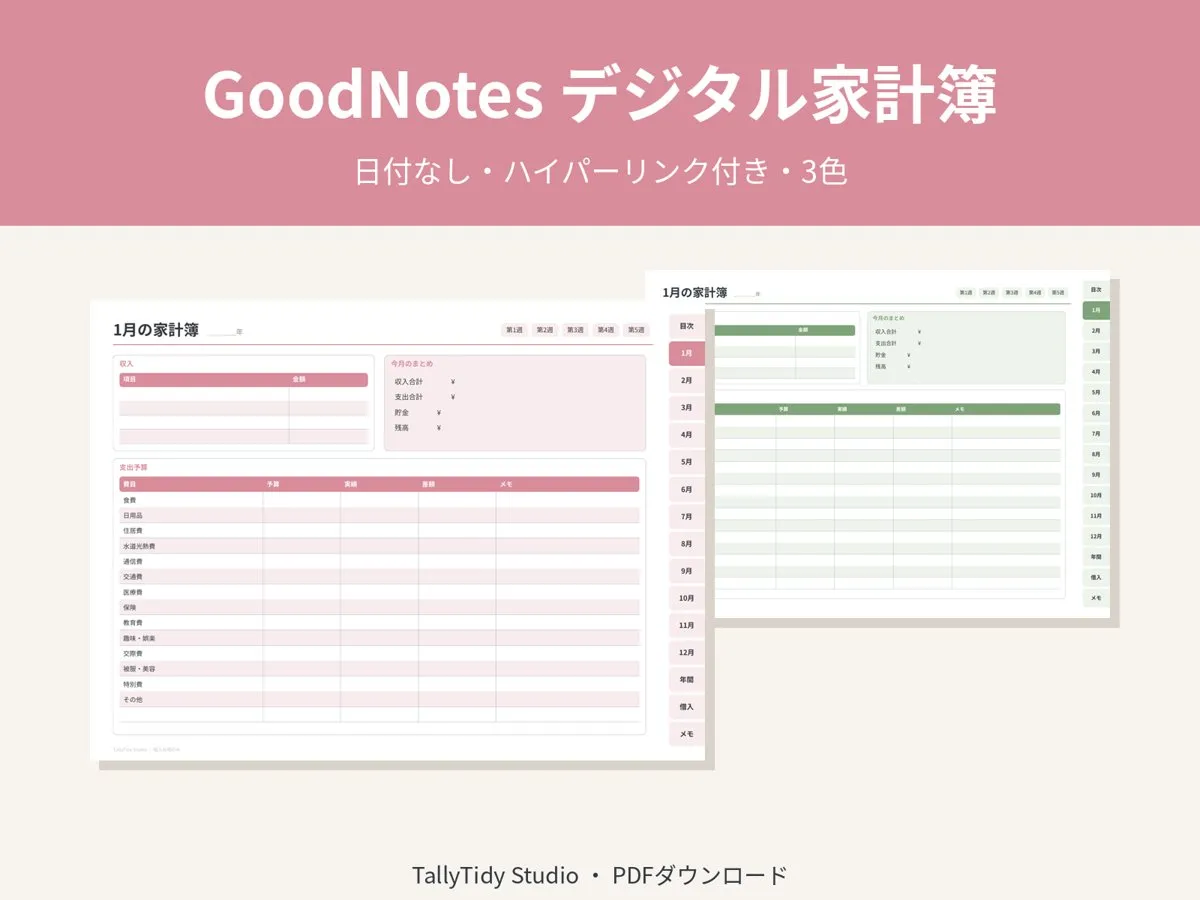
If you would like pre-built pages, our Kakeibo Digital Budget Planner for GoodNotes has monthly start pages, weekly spending pages and review pages laid out in the traditional style (the page labels are in Japanese). If you prefer English printable pages with the same monthly rhythm, the 2027 Budget Planner includes monthly budgets, expense logs and savings trackers.
No, but many people find handwriting is what makes the method work. A stylus on a tablet keeps that feel.
Fixed bills are subtracted at the start of the month. Variable needs like groceries go in the "needs" column.
Fill in what you can from your bank statement and carry on. One gap does not break the method.
General educational information, not financial advice.